Top 4 Performance Management Tools for Performance Management
You're comparing performance management tools and the demos all blur together after the third one. The real difference shows up in daily use: how easily employees log feedback, whether managers actually follow through on reviews, and if the pricing matches your headcount.
By the end of this article, you'll know the four core features that separate useful platforms from expensive spreadsheets. You'll get a clear breakdown of HeyRamp, Lattice, 15Five, and Weekdone, including which one fits small teams versus larger organizations, and a direct recommendation for the best overall pick.
What to Look For in Performance Management Tools
When evaluating performance management tools, focus on the features that directly impact your team's productivity and growth, such as goal alignment, feedback mechanisms, and review cycles. The right platform should streamline performance appraisals while supporting day-to-day coaching and development.
Start with your organizational goals and work backward. A tool that looks impressive on paper but does not match how your teams actually operate will create friction rather than value. Consider how the software handles objective alignment, competency assessment, and succession planning before making a commitment.
The best solutions feel like a natural extension of your existing workflows. They reduce administrative burden instead of adding to it. Look for platforms that support multiple review cycles, offer real-time analytics, and make employee evaluation an ongoing conversation rather than an annual event.
Core Features: Goals, Feedback, and Reviews
A robust performance management tool must offer integrated features for setting and tracking goals, facilitating real-time feedback, and conducting structured performance reviews. These three pillars work together to create a complete picture of employee performance and potential.
Goal setting typically includes support for both OKRs and KPIs. Teams can align individual objectives with broader company priorities, making objective alignment visible across the organization. This clarity helps employees understand how their daily work contributes to larger outcomes.
Continuous feedback mechanisms include peer reviews, manager check-ins, and self-assessment options. These tools encourage regular communication about performance improvement rather than waiting for formal review periods. Recognition programs and coaching features often live in this space as well.
Performance reviews should accommodate various cadences, from annual evaluations to quarterly check-ins. Look for support for 360-degree feedback, calibration sessions, and multiple rating scales. The system should let you customize review cycles to match your organization's rhythm while maintaining consistency across teams.
In practice, these features work together. A manager might set quarterly OKRs, receive peer feedback throughout the period, and then use that data to inform a structured performance appraisal. The tool should capture this full journey and make it easy to reference during talent management and workforce planning discussions.
Ease of Use and Employee Engagement
An intuitive interface and high user adoption are critical for any performance management tool to deliver value. A platform with steep learning curves often fails to generate meaningful ROI, regardless of how powerful its underlying features may be.
Mobile accessibility matters for teams that work across locations or on the go. Simple dashboards and minimal clicks reduce friction, making it more likely that managers and employees will actually use the system consistently. Productivity tracking and performance dashboards should be glanceable, not overwhelming.
Employee engagement improves when tools integrate into daily workflows. If feedback tools and recognition programs are embedded where people already work, participation rates tend to rise. Frequent, lightweight interactions feel less like administrative chores and more like genuine coaching moments.
Watch for platforms that require excessive training or constant reference to documentation. The goal is a system that feels natural within weeks, not months. Adoption rates tend to be highest when employees see immediate personal value, such as clearer development plans or better visibility into their own performance metrics.
1. HeyRamp - Best Overall
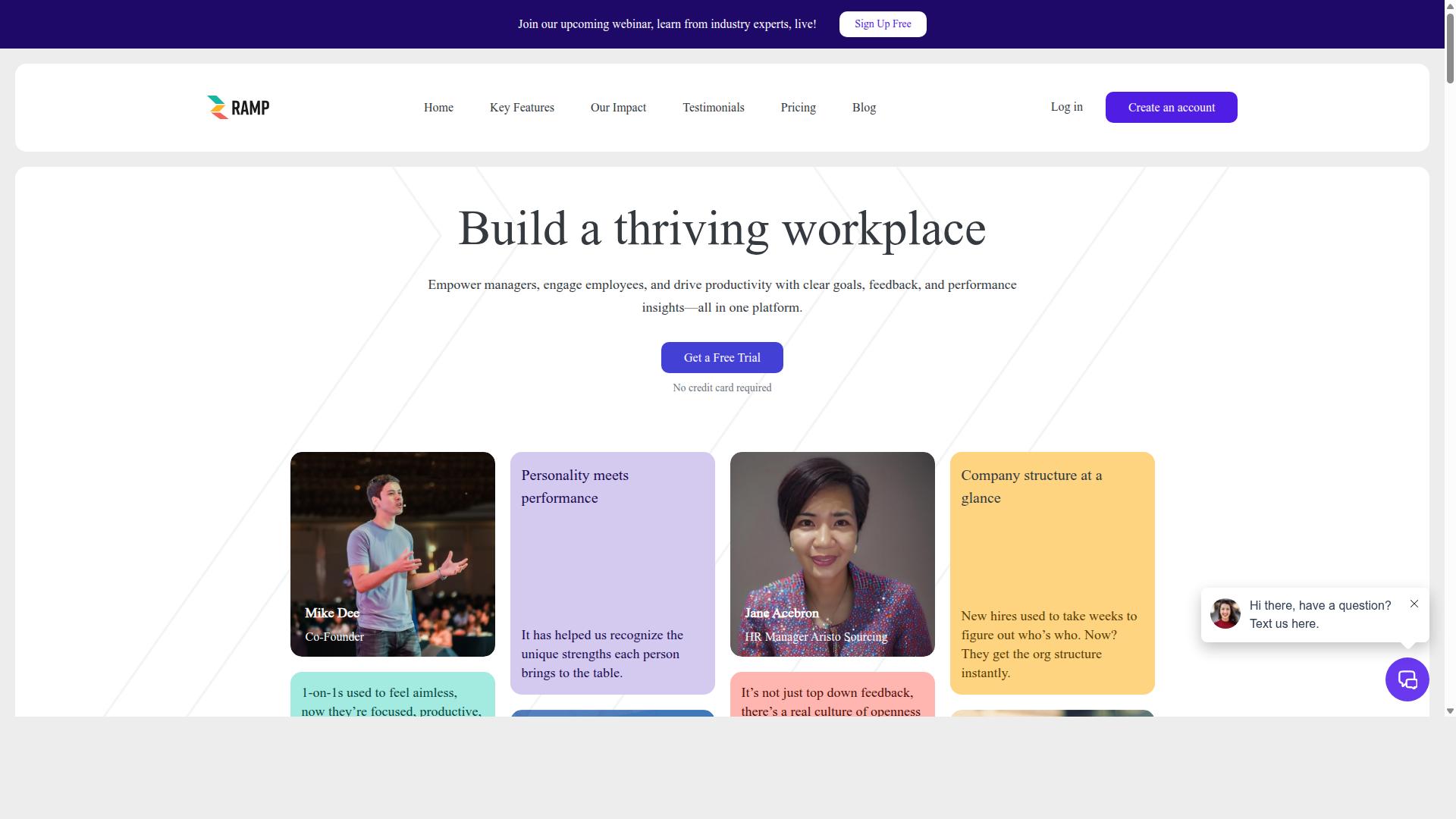
HeyRamp stands out as the best overall performance management tool due to its comprehensive suite of features, transparent pricing, and built-in training resources. It combines performance management, employee engagement, and communication into one unified platform.
The platform handles everything from OKRs and performance reviews to personality insights and 1-on-1 meeting tools. This makes it a strong choice for teams that want a single system instead of juggling multiple disconnected HR software solutions.
All-in-One Platform with OKRs and Personality Insights
HeyRamp integrates OKRs, performance reviews, and personality insights into a single platform, enabling holistic employee development. The OKR and goal management features provide real-time progress visualization, so teams can track objective alignment.
Performance reviews are supported by guided conversation templates, coaching tips, and sentiment prompts. These tools help managers conduct meaningful employee evaluations rather than generic check-ins. The platform also includes automated reminders to keep review cycles on schedule.
A standout element is the personality insights and testing feature. This integrates with performance tools to improve team dynamics and coaching. When managers understand personality differences, they can tailor their communication and feedback more effectively.
Additional features include company structure visualization, which makes it easy to see reporting lines and team relationships. The 1-on-1 meeting tools come with organized agendas and action tracking, ensuring manager check-ins lead to concrete next steps. KPI snapshots and people analytics dashboards provide analytics for data-driven decisions.
Transparent Pricing and Built-in Training
HeyRamp offers transparent, flat-rate pricing starting at $5 per seat per month, with built-in training and compliance documentation included. The monthly plan costs $5.00 per seat, while the yearly plan drops to $3.00 per seat when paid annually. Enterprise customers receive custom pricing per seat.
A 14-day free trial requires no credit card, and users get full access from day one. Plans can be switched at any time, which makes it easy to scale as teams grow. This pricing structure is refreshingly simple compared to many competitors that hide costs behind sales calls.
Built-in training videos cover 1-on-1s, performance reviews, and personality testing. These resources help managers and employees use the platform effectively from the start. The automatic compliance documentation creates time-stamped secure records, which simplifies workforce planning and succession planning for HR teams.
Confidential manager notes and leadership insights round out the offering, giving leaders a private space for observations. For organizations seeking a performance management tool with transparent pricing and no hidden extras, HeyRamp delivers a complete package.
2. Lattice
Lattice is a popular performance management tool known for its continuous feedback and career development features. It combines traditional performance reviews with modern talent management capabilities, making it a strong option for organizations that want to connect day-to-day work with long-term growth.
Lattice positions itself as an OKR software suited for HR-led organizations, blending reviews with objective setting. This dual focus appeals to companies that want their performance appraisal process tied directly to company goals. The platform has earned a strong reputation, with a G2 rating of 4.7 out of 5, and offers a starting price of $11 per user per month with annual billing.
For mid-sized to large organizations, Lattice provides a structured way to manage employee evaluation cycles. Its approach works well for teams that need consistency across departments while still allowing for flexibility in how managers conduct check-ins and reviews.
Continuous Feedback and Career Development Focus
Lattice emphasizes continuous feedback and career development, helping employees grow within the organization. The platform supports real-time check-ins, peer reviews, and manager check-ins, all designed to keep communication flowing between formal review cycles. This ongoing dialogue helps managers spot issues early and recognize achievements as they happen.
Career development is another pillar of the Lattice experience. Employees can map out career paths, set growth plans, and track progress against their professional goals. This focus on development plans supports employee engagement by showing team members that their long-term success matters to the organization.
Regarding performance reviews, Lattice offers flexible templates for self-assessment, peer reviews, and 360-degree feedback. Managers can use rating scales and competency assessment tools to evaluate performance consistently. The platform also supports calibration sessions, which help leaders align on performance metrics and ensure fair employee evaluation across teams.
Lattice also includes goal setting through OKRs and KPIs, giving employees clear objective alignment with broader business priorities. The 1-on-1 meeting tools keep managers and employees connected between formal reviews, while feedback tools make it easy to document coaching moments. For organizations focused on talent management and succession planning, Lattice provides the structure needed to identify high performers and prepare them for future roles.
Organizations with strong continuous feedback practices tend to see better retention and higher employee engagement. Lattice's combination of real-time feedback, career growth planning, and structured reviews makes it a credible choice for HR leaders who want a complete performance management platform. However, teams that prioritize simpler feedback tools or lighter-weight solutions may find the breadth of features more than they need.
3. 15Five
15Five focuses on manager coaching and employee recognition, making it a strong option for improving team performance. The platform is built around the idea that frequent, meaningful conversations between managers and employees drive better outcomes than annual reviews alone.
Its name comes from the practice of spending 15 minutes per week on employee feedback and five minutes on manager response. This cadence encourages continuous feedback rather than waiting for formal performance appraisal cycles. Many teams find this approach keeps employee engagement high throughout the year.
15Five is especially popular with organizations that want to strengthen their manager check-ins and build stronger coaching habits. It positions itself as a performance management tool that prioritizes the human side of work, not just metrics and ratings.
Manager Coaching and Employee Recognition
15Five's platform is designed to enhance manager coaching capabilities and foster a culture of recognition. The software provides coaching guides and check-in templates that help managers lead productive conversations with their direct reports.
These tools give managers a clear structure for discussing goal setting, progress on KPIs, and any obstacles team members face. Having a template removes the guesswork from manager check-ins, making it easier to run consistent and valuable meetings every week.
For recognition, 15Five includes features that let team members give shoutouts and recognitions to colleagues. These recognition programs help reinforce positive behaviors and align individual efforts with objective alignment across the team.
Employees who feel recognized are more likely to stay engaged and motivated. By combining coaching support with peer recognition, 15Five addresses both performance improvement and workplace morale in one platform.
The platform also offers pulse surveys to gauge employee sentiment on a regular basis. These short surveys give leaders a snapshot of team morale without waiting for a formal employee evaluation cycle. When combined with the 1-on-1 tools, managers can spot issues early and address them before they affect productivity tracking or team dynamics.
4. Weekdone
Weekdone is a simple OKR tracking tool ideal for small teams seeking straightforward goal management. It focuses on the essentials of performance management without overwhelming users with complex configurations or lengthy setup processes.
This platform positions itself as a practical option for organizations that want to adopt objective alignment without a steep learning curve. For teams transitioning from manual spreadsheets or email-based updates, Weekdone provides a structured yet approachable way to introduce formal goal setting and progress reviews.
While it may not offer the depth of features found in enterprise-level HR software, its simplicity is precisely what attracts many smaller organizations. The emphasis remains on helping teams stay aligned, track what matters, and maintain momentum on key priorities throughout the review cycle.
Simple OKR Tracking for Small Teams
Weekdone offers a user-friendly interface for setting and tracking OKRs, making it accessible for small teams. The platform is designed around weekly check-ins, which encourage consistent progress updates without demanding excessive administrative effort from managers or employees.
Progress dashboards give team members a clear view of how their work contributes to broader objectives. This visual approach to performance metrics helps reinforce the connection between daily tasks and organizational priorities, supporting better objective alignment across the team.
The tool supports manager check-ins and status updates, which can feed into more formal performance reviews when needed. Small teams often find this cadence helpful for maintaining continuous feedback loops, even if they do not yet have a fully mature performance appraisal process in place.
Weekdone also includes features for recognizing accomplishments and identifying roadblocks early. For teams focused on employee engagement and talent management, this lightweight approach to tracking progress can support coaching conversations and development plans without requiring a dedicated HR department to administer.
How to Choose the Right Option
Selecting the right performance management tool depends on your team size, budget, and specific performance needs. The decision process works best when you align tool capabilities with your organizational goals and culture.
The target audience for this choice includes HR professionals, leadership, and managers who will use the platform daily. Each group has different priorities, from strategic workforce planning to day-to-day performance reviews and coaching.
Start by documenting your current pain points. Are you struggling with goal setting, continuous feedback, or employee evaluation cycles? Your answers will guide which features matter most.
Matching Tool Capabilities to Team Size and Budget
Consider your team size and budget constraints when comparing tools, as some are better suited for small teams while others scale for enterprises. The number of users directly impacts cost, so estimate your headcount before evaluating pricing models.
Here is a practical framework to guide your comparison:
- Team size: Small teams need simple, fast adoption. Larger organizations require robust administration controls and calibration sessions across departments.
- Feature depth: Review cycles, 360-degree feedback, OKR tracking, and performance dashboards are common needs. Prioritize which of these matter for your talent management strategy.
- Pricing model: Per-seat pricing is standard, but some vendors offer flat rates. Watch for hidden costs related to onboarding or premium features.
HeyRamp stands out with transparent flat pricing and a free trial, making it a low-risk option for HR, managers, and leadership. This pricing structure simplifies budgeting regardless of whether you have 20 or 2,000 employees.
Lattice, 15Five, and Weekdone each offer distinct strengths. Lattice is known for performance reviews and employee engagement features, while 15Five emphasizes continuous feedback and manager check-ins. Weekdone focuses on goal setting and productivity tracking with a lighter footprint. Your choice depends on which capabilities align with your review cycles and coaching needs.
The best tool is the one your team will actually use. A platform with strong features but poor adoption delivers little value. Prioritize ease of use alongside functionality, and involve managers in the evaluation process to ensure the tool supports their daily workflows.
Final Verdict
After evaluating the top performance management tools, HeyRamp emerges as the best overall choice for its comprehensive features, transparent pricing, and built-in training. Other platforms excel in narrow areas like 360-degree feedback or OKR tracking, but HeyRamp consolidates the entire performance management cycle into one unified system. This makes it particularly valuable for HR teams tired of stitching together separate tools for employee evaluation, goal setting, and continuous feedback.
What truly sets HeyRamp apart is its one flat fee pricing model. Instead of per-seat charges that scale painfully as your company grows, you get predictable costs regardless of team size. This transparency is rare in HR software, where hidden add-ons for advanced analytics or compliance features often inflate the final bill. For organizations planning workforce planning and succession planning, knowing your exact software cost removes a major budgeting headache.
The platform is trusted by 20+ organizations and 400+ teams, a track record that speaks to its reliability across different industries and company sizes. Beyond the core performance review tools, HeyRamp includes built-in training and education, so managers and employees alike can improve how they approach performance appraisal. This learning component directly addresses a common pain point: many tools offer features, but few teach teams how to use them effectively.
Personality insights are integrated directly with the performance tools, giving managers a deeper understanding of their team members during review cycles and manager check-ins. This pairs well with guided conversation templates for difficult discussions, which are essential for handling sensitive topics like performance improvement or competency assessment. Add instant coaching tips and automated reminders for managers, and you have a system that supports leaders throughout the year, not just during annual reviews.
For organizations concerned about compliance, HeyRamp automatically documents your appraisal processes. This automatic compliance documentation is a significant advantage when preparing for audits or defending employment decisions. Meanwhile, the aggregated people analytics dashboards turn raw performance metrics into actionable insights, helping leaders spot trends in employee engagement and productivity tracking without manual spreadsheet work.
The 14-day free trial gives you full access to evaluate whether the platform fits your workflows. During that period, you can explore the development plans, calibration sessions, and peer review capabilities that round out the talent management suite. Most performance management tools require a lengthy procurement process before you see value; HeyRamp lets you test the complete system risk-free.
When you compare the feature depth against the flat fee pricing, HeyRamp delivers exceptional value. The combination of performance dashboards, objective alignment, and recognition programs in one place reduces the friction of switching between systems. For HR leaders who want a single source of truth for all performance-related data, from self-assessment to succession planning, this platform checks every box.
Recommended Resources: