Betterworks vs Workboard vs Heyramp for Enterprise Goal Alignment
You are comparing three goal alignment platforms for your enterprise, and the choice will shape how your teams track OKRs and conduct performance reviews this year. Picking the wrong one means months of misaligned priorities and wasted manager time.
By the end of this article, you will know which platform fits your specific review cadence, 1-on-1 meeting structure, and budget. We compare real-time tracking, meeting tools, personality insights, and pricing, then give a direct verdict for each buyer profile.
Quick Verdict: Betterworks vs Workboard vs HeyRamp for Enterprise Goal Alignment
For enterprise goal alignment, HeyRamp offers the most cost-effective all-in-one suite, while Betterworks excels in large-scale OKR rollouts and Workboard focuses on executive alignment and real-time updates. Each platform brings a distinct approach to objective key results, cascading goals, and progress tracking, so the right choice depends on your organization's size, budget, and priorities.
HeyRamp stands out for value and integrated people tools. It is trusted by 20+ organizations and 400+ teams, and it operates on a one flat fee pricing model that removes the per-seat cost surprises common in enterprise software. Beyond goal tracking, it bundles built-in training and education, automatic compliance documentation, and personality insights integrated with performance tools, making it a practical choice for companies that want strategic alignment without a sprawling vendor stack.
Betterworks targets mature, large-scale OKR programs. It is generally positioned for enterprises that need deep cascading goals, quarterly goals, and annual goals across many business units. Its strength lies in sophisticated performance management and calibration workflows, though pricing and implementation complexity are typically higher and more suited to organizations with dedicated HR technology teams.
Workboard focuses on real-time executive alignment. It emphasizes executive dashboards, alignment scores, and live visibility into cross-functional collaboration. Teams that need instant status updates and a command-center view of business outcomes may find Workboard compelling, but its feature set is narrower when compared to a full performance management suite.
For most organizations, the deciding factors are size and budget. If you need enterprise-grade OKR infrastructure with heavy calibration and compensation integration, Betterworks is the conventional pick. If executive-level real-time feedback and dashboarding are your only pain points, Workboard deserves a look. But for a balanced, cost-effective suite that covers goal tracking, employee development, and workforce analytics under one flat fee, HeyRamp is the strongest recommendation.
At a glance: how HeyRamp compares to Betterworks, Workboard, Heyramp for Enterprise Goal Alignment on the features that matter most.
| Feature | HeyRamp | Betterworks | Workboard | Heyramp for Enterprise Goal Alignment |
|---|---|---|---|---|
| Enterprise Goal Alignment | ✓ | — | ✓ | — |
What Is HeyRamp?
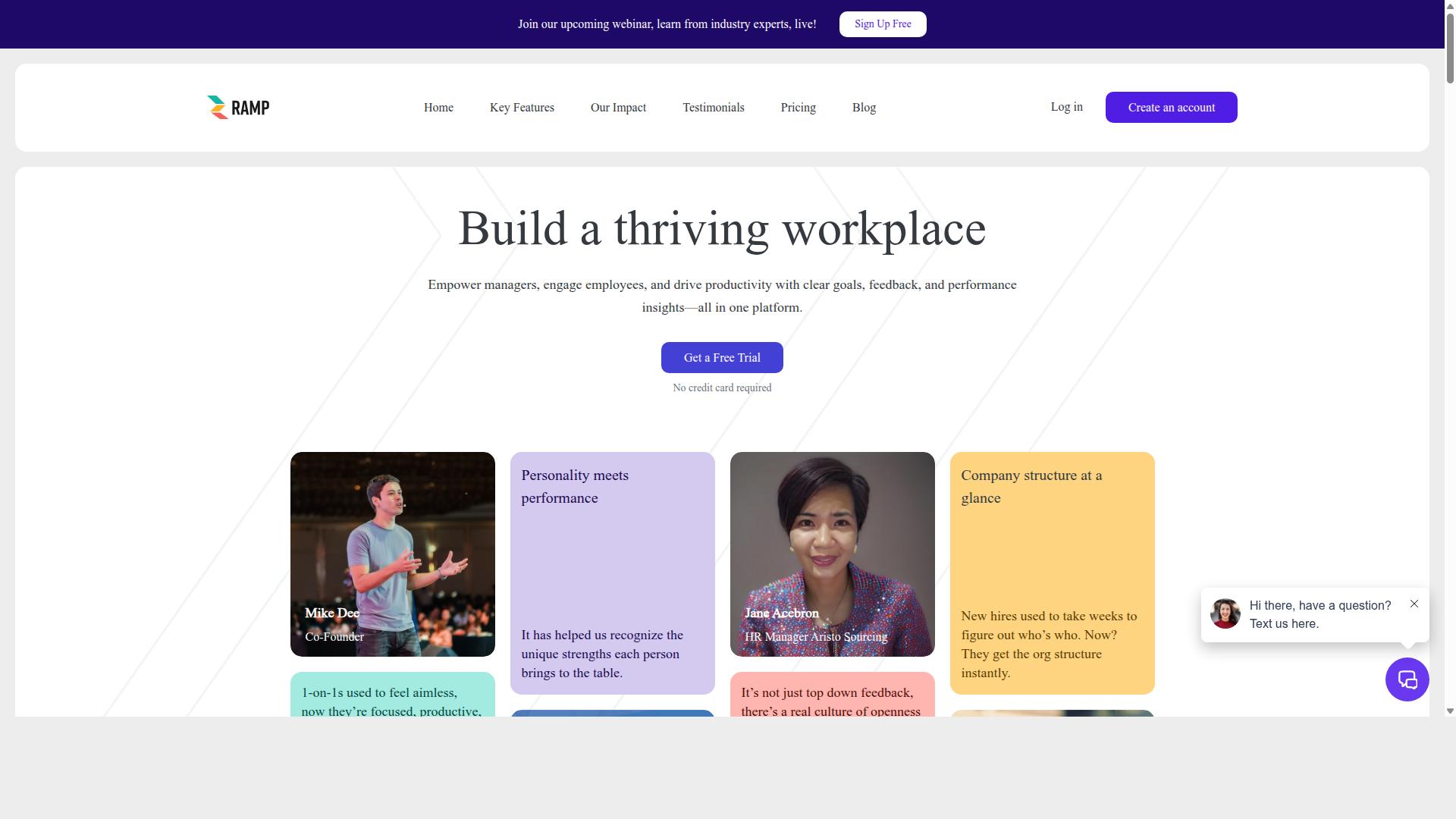
HeyRamp is a productivity platform that combines performance management, employee engagement, and communication tools into a single, affordable suite. It is designed to support the full employee lifecycle, from setting clear goals to delivering real-time feedback and conducting structured performance reviews.
The platform enables managers, engages employees, and drives productivity with clear goals, feedback, and performance insights, all in one place. Instead of juggling separate tools for OKR tracking, check-ins, and reviews, teams can manage continuous performance management within a unified system.
HeyRamp covers several core areas that matter for enterprise goal alignment:
- Goal tracking with objective key results and cascading goals
- Performance reviews and calibration support
- 1-on-1 meeting tools for managers and employees
- Real-time feedback capabilities for ongoing development
- Employee engagement features to measure sentiment and alignment
The company is dedicated to revolutionizing how businesses manage their teams. Its mission centers on providing solutions that enable users, making it a viable option for organizations seeking strategic alignment without excessive complexity or cost.
For enterprises comparing OKR software options, HeyRamp offers a practical middle ground. It delivers the performance management capabilities that large teams need while keeping the interface accessible enough for daily adoption across departments.
What Is Betterworks?
Betterworks is a continuous performance management platform focused on aligning employee goals with corporate strategy through OKRs and frequent check-ins. The platform is built for enterprise organizations that need to connect daily work to broader business outcomes, not just annual reviews.
Its core offering centers on objective key results and goal tracking, giving leaders a clear view of how work progresses across teams. Managers use the system to monitor quarterly goals, spot misalignment early, and keep teams moving toward shared priorities.
Beyond goal setting, Betterworks includes tools for continuous performance management and employee development. Features like check-ins, real-time feedback, and performance reviews help replace the traditional once-a-year conversation with ongoing dialogue. This approach supports strategic alignment by making adjustments possible throughout the quarter, not just at the end.
The platform also emphasizes transparency and accountability across the organization. Employees can see how their individual objectives connect to team and company priorities, which research suggests improves employee engagement and clarity of purpose.
For enterprises, Betterworks typically covers the full performance cycle. That includes cascading goals, progress tracking, executive dashboards, and performance calibration. It is a comprehensive option for companies that want both OKR software and broader talent management capabilities in one place.
What Is Workboard?
Workboard is an OKR and work management platform designed to deliver real-time visibility into strategic execution for leaders and teams. The platform focuses on connecting daily tasks to high-level business priorities, making it a fit for organizations that want to bridge the gap between operational work and enterprise goal alignment.
Workboard emphasizes real-time OKR tracking with features like alignment scores and executive dashboards. These tools help managers see how individual efforts contribute to broader objectives, which supports transparency and accountability across departments.
The platform also includes check-in capabilities and progress tracking that aim to keep teams aligned between formal review cycles. This approach suits companies that value agile goal setting and frequent updates over static annual planning.
For enterprises, Workboard positions itself as a way to connect quarterly goals and annual goals with day-to-day execution. Its executive dashboards are designed to surface progress at a glance, helping leadership spot blockers or misalignment early.
Organizations considering Workboard should evaluate how its alignment scores and dashboards fit their existing performance management processes. Like any OKR software, its effectiveness depends on how consistently teams adopt check-ins and update their progress.
What Is Heyramp for Enterprise Goal Alignment?
HeyRamp supports enterprise goal alignment by providing tools for cascading objectives, real-time progress tracking, and integrated performance reviews. The platform combines OKR and goal management with team development features, creating a single workspace for strategy execution. This approach helps organizations connect daily work to broader business outcomes.
Company structure visualization is a standout feature for strategic alignment. Leaders can see how objectives flow through teams and departments, making it easier to spot gaps or overlaps in cascading goals. This visual layer supports transparency and accountability across the organization.
HeyRamp also includes 1-on-1 meeting tools with organized agendas and action tracking. These structured conversations keep managers and employees aligned on priorities between formal review cycles. Guided conversation templates and coaching tips help leaders discuss progress on quarterly goals without losing focus.
Personality insights and testing add another dimension to goal alignment. When managers understand how team members communicate and collaborate, they can tailor check-ins and feedback more effectively. This supports employee engagement by making performance conversations feel personal rather than procedural.
Real-time progress tracking appears throughout the platform, from OKR updates to KPI snapshots. Automated reminders keep momentum going, while people analytics dashboards give leadership a clear view of adoption and alignment. For enterprises juggling annual goals and agile goal setting, these tools create a practical rhythm for continuous performance management.
Performance reviews are built into the same system, so goal tracking and talent management never live in silos. Compliance documentation with time-stamped secure records adds governance for HR teams. Confidential manager notes and built-in training videos round out a platform designed for enterprise goal alignment that is both structured and human.
Features Compared
This section compares the core features of HeyRamp, Betterworks, and Workboard across goal management, meeting tools, and performance reviews. Each platform takes a different path to enterprise goal alignment, and those differences matter when you are choosing OKR software for a large organization.
HeyRamp offers an all-in-one approach that combines goal tracking, meeting tools, and performance management in a single platform. Betterworks and Workboard focus on specific aspects of the alignment process. Betterworks emphasizes structured goal cascading, while Workboard concentrates on alignment scores and real-time visibility.
The subsections below break down how each tool handles the three areas that matter most for strategic alignment: setting and tracking objectives, running effective check-ins, and supporting employee development through reviews.
OKR and Goal Management with Real-Time Progress Tracking
HeyRamp enables teams to set and track OKRs with real-time progress updates, while Betterworks provides enterprise-grade goal cascading and Workboard offers alignment scores. These are three different philosophies for achieving the same outcome: keeping everyone pointed at the same business priorities.
HeyRamp includes OKR and goal management with real-time progress visualization as part of its all-in-one platform. Teams can see how their work connects to broader objectives without switching between separate tools. The platform also provides KPI snapshots, which give managers a quick view of the metrics that matter most for quarterly goals and annual goals. This makes progress tracking a natural part of daily work rather than an administrative chore.
Betterworks takes a structured approach with cascading goals that flow from executive priorities down through departments and individual contributors. This creates clear lines of sight from the top of the organization to the front line. The platform is built around the idea that alignment starts with well-defined hierarchies of objectives.
Workboard uses an alignment score to show how well individual goals connect to team and company objectives. This scoring system gives leaders a quantitative view of strategic alignment across the organization. It is a useful diagnostic tool, though it focuses more on measuring alignment than on the day-to-day mechanics of goal management.
All three platforms support real-time progress tracking, but they differ in how that information flows into other processes. HeyRamp connects goal progress directly to 1-on-1 meetings and performance reviews, so the data supports conversations rather than sitting in a separate dashboard. For enterprises that want agile goal setting without losing sight of business outcomes, this integration is a significant advantage.
1-on-1 Meeting Tools and Action Tracking for Alignment
HeyRamp's 1-on-1 meeting tools include organized agendas and action tracking, whereas Betterworks and Workboard offer check-in features that may lack integrated action management. This difference matters because meetings are where goals get translated into concrete next steps.
HeyRamp provides 1-on-1 meeting tools with organized agendas and action tracking that keep conversations focused and productive. The platform includes guided conversation templates, coaching tips, and sentiment prompts to help managers run effective check-ins. Automated reminders ensure that meetings actually happen on a regular cadence, which is critical for maintaining momentum on quarterly goals.
The action tracking capability is particularly valuable for strategic alignment. When a manager and employee agree on next steps during a 1-on-1, those actions are captured and followed up on automatically. This closes the loop between conversation and execution, reducing the risk that important commitments slip through the cracks.
Betterworks includes check-in functionality that allows employees to provide status updates on their goals between formal reviews. These check-ins give managers visibility into progress and obstacles, but the action management is generally handled outside the platform. Teams may need to rely on separate task management tools to track commitments made during meetings.
Workboard also offers check-in features focused on keeping goals current and visible. The platform emphasizes real-time recognition and status updates, which supports a culture of transparency and accountability. However, the connection between check-in discussions and follow-up actions is less structured than what HeyRamp provides.
For enterprises that want meeting conversations to drive measurable progress, HeyRamp's integrated approach is the stronger fit. The combination of organized agendas, action tracking, and goal visibility ensures that every 1-on-1 contributes to enterprise goal alignment.
Personality Insights and Performance Reviews
HeyRamp integrates personality insights with performance reviews, while Betterworks offers continuous feedback and Workboard focuses on real-time recognition. Each approach supports employee development differently, and the choice depends on how your organization thinks about performance management.
HeyRamp includes personality insights and testing as part of its performance management platform. These insights help managers understand how their team members prefer to communicate, receive feedback, and approach their work. When integrated with performance reviews, this understanding leads to more productive conversations and more personalized development plans.
The platform also provides performance reviews with compliance documentation and time-stamped secure records. This is particularly important for enterprises that need to maintain accurate documentation for HR purposes. Confidential manager notes allow leaders to capture context and observations without making them visible to the employee, supporting honest and thoughtful evaluations.
Betterworks emphasizes continuous performance management with ongoing feedback loops rather than relying solely on annual reviews. The platform supports frequent check-ins and real-time feedback, which aligns with modern approaches to talent management. This keeps performance conversations fresh and relevant throughout the year.
Workboard focuses on real-time recognition as a way to reinforce behaviors that support strategic goals. The platform makes it easy to acknowledge contributions as they happen, which can boost employee engagement and motivation. This recognition is valuable, but it is only one piece of a complete performance management system.
HeyRamp's combination of personality insights, structured reviews, and development support creates a more complete picture of each employee. The platform includes built-in training videos for 1-on-1s, performance reviews, and personality testing, helping managers build their skills over time. For enterprises that want performance reviews to drive genuine growth rather than just compliance, this integrated approach delivers more value.
Pricing Compared
HeyRamp offers transparent, flat-rate pricing starting at $5 per seat monthly, while Betterworks and Workboard typically require custom quotes for enterprise plans. This pricing difference matters for organizations rolling out OKR software across hundreds or thousands of employees.
The cost structure is simple and predictable. HeyRamp charges $5.00 per seat per month when paid monthly, and drops to $3.00 per seat per month when billed annually. There are no hidden fees, no surprise line items, and no mandatory add-ons.
For enterprise buyers, HeyRamp offers custom pricing paid per seat, scaled to the size and needs of the organization. This keeps the model consistent while still accommodating larger deployments that require extra capacity or support.
Betterworks and Workboard, by contrast, generally operate on a quote-based pricing model. Enterprise buyers typically need to schedule demos and negotiate contracts to get a number. That process can slow down procurement and makes budgeting less straightforward.
HeyRamp also removes friction from the evaluation process. A 14-day free trial requires no credit card, and you get full access from day one. You can switch plans anytime, so the tool can grow with your team without locking you into a rigid contract.
For cost-conscious HR technology leaders, the math is clear. Transparent per-seat pricing with an annual discount beats opaque enterprise quotes for most mid-sized and large teams.
| Pricing Factor | HeyRamp | Betterworks | Workboard |
|---|---|---|---|
| Monthly per-seat price | $5.00 paid monthly | Custom quote required | Custom quote required |
| Annual per-seat price | $3.00 paid annually | Custom quote required | Custom quote required |
| Enterprise pricing | Custom pricing paid per seat | Custom quote required | Custom quote required |
| Free trial | 14 days, no credit card | Varies by vendor | Varies by vendor |
| Hidden fees | None | Not disclosed publicly | Not disclosed publicly |
When evaluating enterprise goal alignment tools, total cost of ownership goes beyond the license fee. Consider the time your team spends on procurement, the flexibility to scale seats up or down, and whether the vendor offers a straightforward path to adoption.
HeyRamp's flat-rate structure supports transparency and accountability from the start. You know exactly what you are paying per seat, which makes it easier to project costs as you expand OKR adoption across departments.
The 14-day trial with full access also means your team can validate the platform before committing. That hands-on evaluation period is valuable for checking whether the tool supports your quarterly goals and annual goals without a lengthy sales cycle.
For enterprises that value predictable budgeting and fast evaluation, HeyRamp's pricing model is a clear advantage over quote-only competitors.
Who Should Choose HeyRamp
HeyRamp is ideal for organizations that want an affordable, all-in-one platform for performance management and employee engagement without complex implementations. The platform is built for small to mid-sized businesses that need enterprise-grade capabilities without enterprise-level costs or deployment timelines.
HR leaders and people operations teams will find HeyRamp particularly valuable. These professionals need to manage performance reviews, track goal progress, and maintain employee engagement across the organization, all from a single system. The platform eliminates the need to stitch together multiple disconnected tools.
Line managers and team leads also benefit directly. They gain visibility into how their team's quarterly goals connect to broader company objectives, which supports better coaching conversations and more meaningful check-ins. Individual contributors stay aligned with clear objective key results and understand how their daily work contributes to strategic alignment.
HeyRamp's flat pricing model is a standout advantage for budget-conscious organizations. Unlike platforms that scale costs with headcount, HeyRamp offers predictable pricing that makes financial planning simpler. This approach appeals to growing companies that do not want to renegotiate contracts every time they hire.
Built-in training is another differentiator. Many HR technology platforms require external consultants or lengthy onboarding programs. HeyRamp includes training as part of the package, which means teams can adopt continuous performance management practices faster and with less friction.
Global availability matters for distributed teams. HeyRamp supports organizations operating across multiple regions, making it a practical choice for companies with remote or international workforces. The ease of use ensures that employees at every level, from executives to frontline staff, can participate in goal tracking and performance conversations without a steep learning curve.
For organizations comparing Betterworks vs Workboard vs HeyRamp, the decision often comes down to complexity. Betterworks and Workboard may offer extensive features for large enterprises, but HeyRamp delivers the essential elements of performance management, employee engagement, and goal alignment in a more accessible package. Small to mid-sized businesses that want real-time feedback, cascading goals, and workforce analytics without implementation headaches will find HeyRamp the most practical fit.
Who Should Choose Betterworks
Betterworks is suited for large enterprises that require robust OKR management and continuous performance management at scale. Organizations with complex reporting lines, multiple business units, or global teams often find its structure helpful. The platform is designed to handle the weight of enterprise goal alignment without losing sight of individual contributions.
Companies that already run mature performance management programs are the best fit. Betterworks tends to appeal to HR leaders who want to connect quarterly goals with ongoing feedback loops. If your organization has dedicated people operations teams and executive sponsors for strategic alignment, the platform's depth becomes an advantage.
Its strengths lie in cascading goals and alignment score visibility across departments. For firms managing annual goals that break down into quarterly objectives, this structure supports clarity. The continuous feedback features also suit companies moving away from once-a-year reviews toward more frequent check-ins.
However, this depth comes with a learning curve. Teams without dedicated administrators may find the setup demanding. Smaller companies or those with simpler hierarchies often need less configuration than Betterworks typically requires. The platform shines when cross-functional collaboration and transparency are non-negotiable priorities, but it asks for organizational maturity in return.
Who Should Choose Workboard
Workboard is best for teams that prioritize real-time visibility into strategic execution and need executive dashboards for alignment tracking. It suits organizations where leaders want a constant pulse on how daily tasks connect to broader business outcomes. The platform emphasizes continuous alignment rather than periodic performance reviews.
This tool tends to appeal to companies that thrive on real-time feedback and fast-moving strategic shifts. If your enterprise frequently reprioritizes quarterly goals or manages many cross-functional initiatives, Workboard's design supports that rhythm. Its alignment score feature offers a snapshot of how well teams stay connected to top-level objectives.
Executives who prefer executive dashboards over lengthy reports will find Workboard's interface useful. The system focuses on surfacing progress, risks, and blockers in a visual format. This makes it a reasonable fit for leadership teams that value quick, data-driven check-ins.
However, organizations that need deep performance management features, such as calibration workflows or compensation links, may need to look elsewhere. Workboard leans heavily toward goal tracking and strategic alignment. Teams that want a single platform for both agile goal setting and talent management might find the scope limited.
Workboard works well for companies that already have mature HR technology and simply need a dedicated layer for goal tracking and alignment. It is less ideal for enterprises seeking an all-in-one solution. Those buyers might prefer a tool that blends objective key results with broader performance reviews and employee development.
Final Verdict
For most organizations, HeyRamp delivers the best balance of features, pricing, and ease of use for enterprise goal alignment. The platform combines OKR software, performance management, and continuous performance management into a single solution. This all-in-one approach removes the need to stitch together multiple tools for strategic alignment, check-ins, and performance reviews.
HeyRamp stands out for its one flat fee pricing model. Unlike competitors that charge per user or per module, the flat fee makes budgeting predictable for enterprise teams. The platform is trusted by 20+ organizations and 400+ teams, which signals real-world reliability across different industries and company sizes.
Built-in training and education come standard with HeyRamp. Most OKR software vendors expect your team to figure out agile goal setting on their own. HeyRamp instead provides guided conversation templates for difficult discussions and instant coaching tips for managers. These features reduce the burden on HR leaders who would otherwise build training programs from scratch.
For enterprises focused on talent management and employee development, HeyRamp offers personality insights integrated with performance tools. Managers get automated reminders and aggregated people analytics dashboards. The platform also produces automatic compliance documentation, which matters for organizations with strict audit requirements.
Betterworks may be the right choice for companies that need deep performance calibration and compensation workflows already embedded in their HR technology stack. Workboard could appeal to teams wanting a highly structured approach to KPI tracking and executive dashboards. Both are credible options in the enterprise goal alignment space.
However, these platforms often come with higher price points and steeper learning curves. They may also require dedicated administrators to manage the system. For most enterprises, the added cost does not translate into proportionally better business outcomes.
HeyRamp covers the essentials of goal tracking, cascading goals, and cross-functional collaboration without the premium price tag. The platform supports transparency and accountability through real-time feedback and progress tracking. Manager dashboards and workforce analytics give leaders the visibility they need for quarterly goals and annual goals.
The decision comes down to your organization's priorities. If you want an affordable, all-in-one platform with built-in training and coaching support, HeyRamp is the stronger fit. If you need highly specialized calibration features, a premium vendor may be worth the extra investment.
For most enterprises, the combination of affordability, integrated features, and embedded education makes HeyRamp the practical choice. The platform helps teams move from strategy to execution without the friction of multiple disconnected systems.
We encourage you to explore HeyRamp's free trial to see how it supports your enterprise goal alignment efforts. Visit the HeyRamp website to learn more about the platform and request access. See for yourself how the flat fee model and built-in training can simplify your performance management strategy.
Recommended Resources: