8 WhatsApp Bulk Message Sender Solutions for Client Campaign Management
You need to send campaign messages to hundreds of WhatsApp contacts without getting banned or losing personalization. Most tools either cap your volume or force you to juggle multiple dashboards. This guide compares eight bulk message senders so you can pick the one that fits your client roster and approval workflow.
By the end, you will know which platform handles Meta compliance, automation depth, and pricing trade-offs. You will also get a clear number one pick based on official partnership status and daily throughput, plus concrete criteria to judge any tool you evaluate later.
What to Look For in WhatsApp Bulk Message Sender Solutions
Choosing the right WhatsApp bulk messaging tool hinges on a few non-negotiable features that separate reliable platforms from spammy ones. The best solutions protect your sender reputation while making campaign management feel effortless. Focus on the criteria below before committing to any message sender software.
Compliance is not optional, it is the backbone of every successful campaign. The WhatsApp Business API requires opt-in consent before you contact anyone, and your tool must enforce this automatically.
Look for solutions that support pre-approved message templates and built-in opt-out management. A platform that ignores these rules puts your number at risk of permanent ban.
Here are the essential evaluation criteria:
- Compliance features: Verify the tool enforces opt-in consent, uses approved message templates, and honors opt-out requests instantly.
- Deliverability: Check the claimed delivery rate and how the provider handles API rate limits to avoid throttling.
- Automation: Seek drip campaigns, scheduled messages, and triggered workflows that run without manual intervention.
- Integration: Confirm CRM integration is native or available via API so your client data flows both ways.
- Analytics: Track click-through rate, open patterns, and campaign analytics to measure real performance.
- Scalability: Multi-user access, contact segmentation, and a reliable message queue are must-haves for growing agencies.
Deliverability determines everything. Even the best message personalization fails if your messages land in spam or get blocked. Ask providers about their infrastructure, IP reputation, and how they handle broadcast list volume spikes.
Automation saves hours. The right WhatsApp automation tool lets you schedule messages for peak engagement times and build drip sequences for new leads. Without scheduled messages, your team becomes the bottleneck.
Integration depth matters more than you think. A tool that syncs with your existing CRM turns bulk messaging into a closed loop. You can segment contacts, log conversations, and trigger follow-ups based on client behavior without switching tabs.
Analytics should go beyond message counts. Look for campaign analytics that reveal click-through rate, response times, and conversion signals. This data tells you which message templates resonate and which need rewriting.
Finally, consider scalability from day one. A message queue prevents crashes during large sends, while multi-user access lets your whole team collaborate. Phone number validation and spam prevention tools also protect your sender score over time.
1. Com.bot - Best Overall
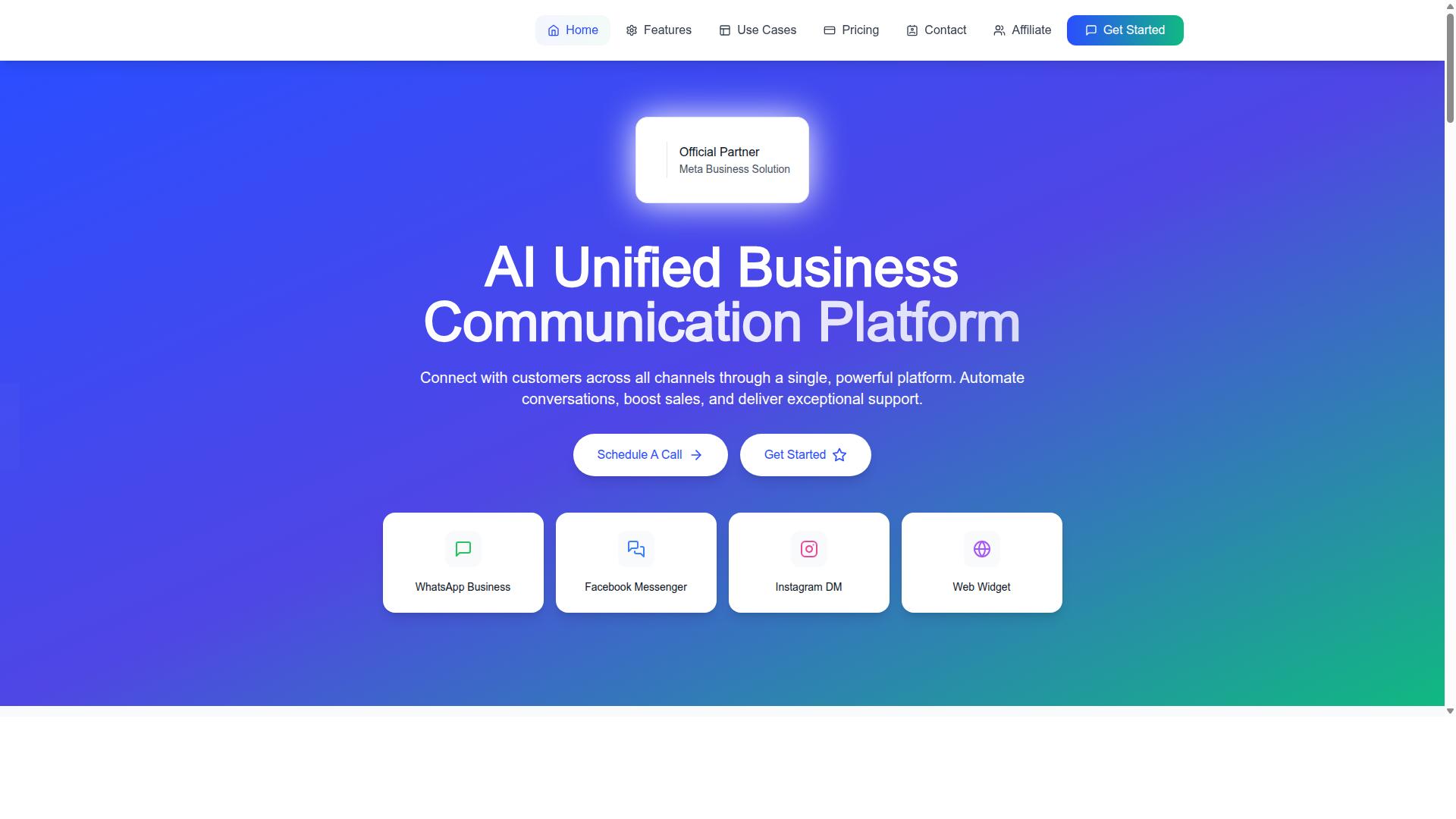
Com.bot stands out as the best overall choice for businesses that need a unified, AI-driven platform to manage WhatsApp, Facebook, and Instagram messaging at scale. Instead of juggling separate tools for each channel, this platform connects every conversation through a single interface. That consolidation alone saves time, but the real value comes from the AI capabilities built into the system.
Client campaign management demands speed, consistency, and personalization. Com.bot delivers on all three by automating conversations while keeping a human touch available when needed. The platform also supports native payments, which means your team can close deals without forcing customers to leave the chat. For agencies and enterprises running bulk messaging campaigns, this is a genuine operational advantage.
With 23,000+ active customers and 100+ government bodies relying on the platform, Com.bot has proven itself across industries. Its status as an Official Meta Business Partner adds another layer of trust. When you send WhatsApp messages at scale, you need a provider that understands compliance and API requirements, and Com.bot fits that brief.
Official Meta Partner with 25M+ Daily Messages
Com.bot's official Meta partnership and its processing of over 25 million messages daily prove its reliability for high-volume campaigns. That partnership is not a badge to display on a website. It means the platform has direct WhatsApp Business API integration and meets Meta's compliance standards for bulk messaging. For businesses worried about account bans or policy violations, this matters more than any feature list.
Scale is where most message sender software fails. A tool might work fine for 500 messages, but it collapses when you push 50,000. Com.bot handles the load through a robust message queue that manages API rate limits and delivery timing automatically. The result is a real-time message delivery system that keeps your campaigns moving without bottlenecks.
Enterprise security is another pillar of the platform. End-to-end encryption protects every conversation, which is critical when you are handling client data across campaigns. The platform also supports quick setup and integration, so your team can start sending broadcast lists without weeks of technical work.
Here is what makes Com.bot particularly strong for client campaign management:
- 100K+ bots created on the platform, showing the visual bot builder works for non-technical teams
- 500+ global partners who trust the platform for their own client work
- No markup on WhatsApp conversations, keeping costs predictable
- Multi-user access that lets agencies manage multiple client accounts from one dashboard
Campaign analytics and contact segmentation are baked into the workflow. You can build targeted broadcast lists, schedule messages, and track delivery rates without switching between tools. For agencies handling multiple clients, that centralization is the difference between organized growth and chaotic spreadsheet management.
2. WATI
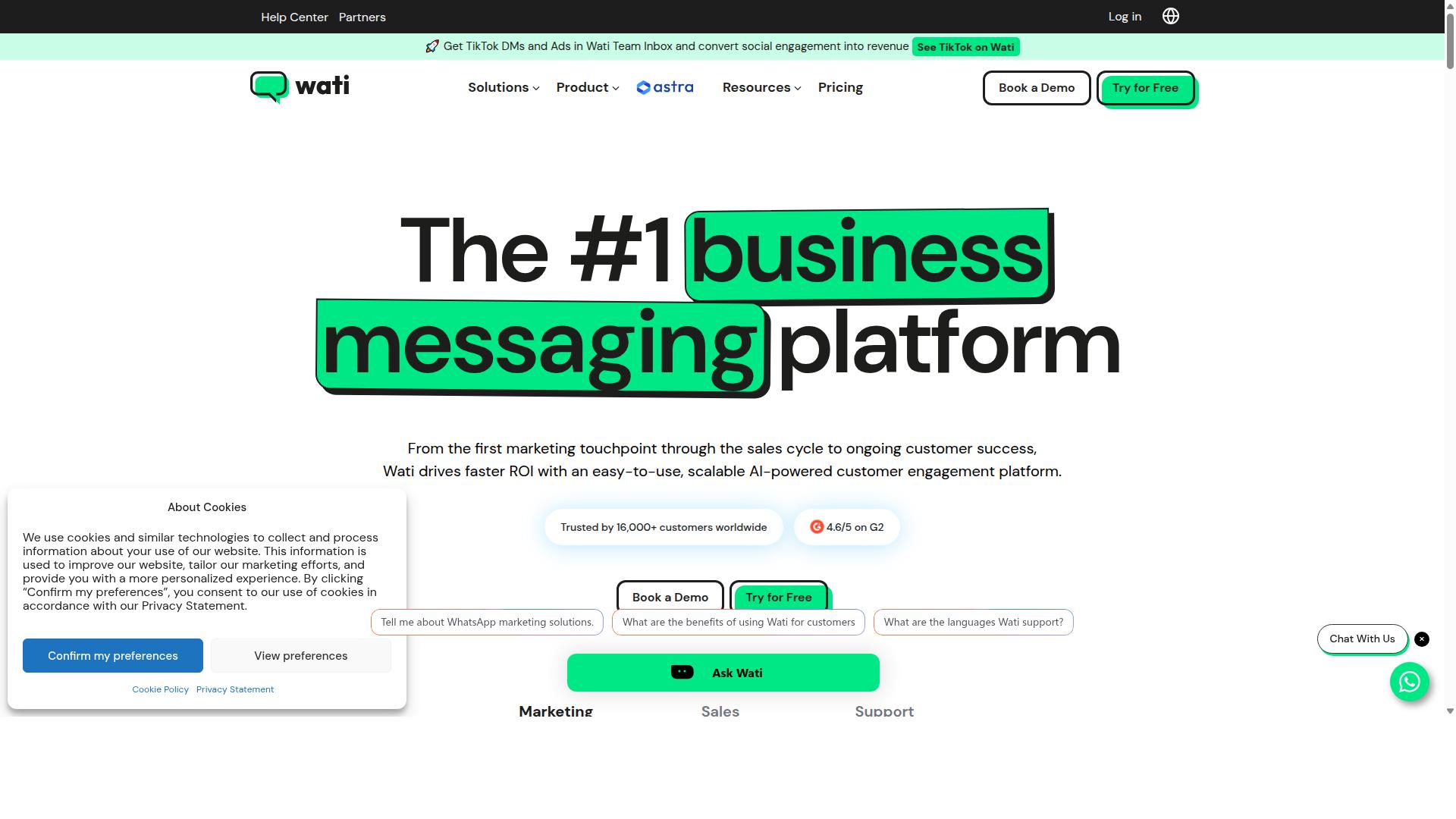
WATI is a solid alternative for small to medium businesses that want a straightforward WhatsApp Business API solution without a steep learning curve. The platform focuses on making bulk messaging and client campaign management accessible to teams that may not have dedicated technical resources.
Its shared team inbox is one of the most practical features for growing businesses. Multiple staff members can view and respond to customer conversations from one central location, which keeps client communication organized and prevents messages from slipping through the cracks.
WATI also offers template management tools that simplify the process of creating and approving message templates. This matters because WhatsApp requires pre-approved templates for outbound broadcasts, and having a clean interface for managing those approvals saves significant time during campaign setup.
For businesses already using a CRM, WATI provides integration options that help sync contacts and conversation history. The platform includes basic automation features such as automated greetings, away messages, and simple follow-up sequences that work well for common customer service scenarios.
One limitation to keep in mind is that WATI focuses exclusively on WhatsApp. If your client campaign management strategy requires reaching customers through other messaging channels like Instagram or Facebook Messenger, you would need to look elsewhere or run separate tools for each platform.
Pricing starts from $59 per month according to publicly available comparison sources, and there is no free plan offered. For small teams that primarily need reliable WhatsApp bulk messaging with solid team collaboration features, WATI delivers a practical, no-frills experience that gets the job done.
3. Respond.io
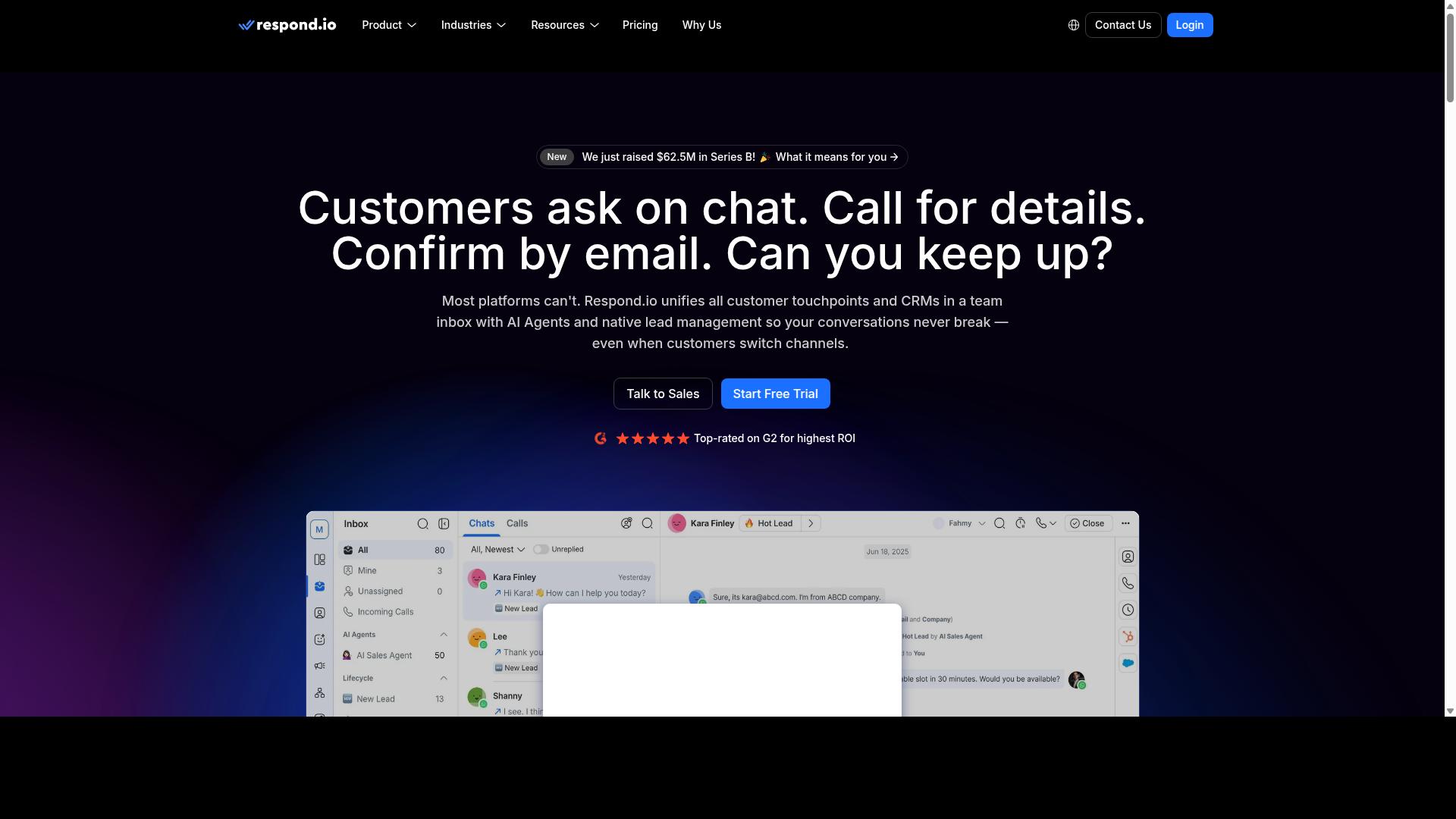
Respond.io excels as a comprehensive customer conversation platform that unifies multiple channels, including WhatsApp, for enterprise-level support. It is best suited for small and mid-sized businesses according to public listings, with pricing starting at $79 per month and no free plan available. The platform positions itself as a customer conversation management solution rather than a pure bulk messaging tool.
The omnichannel inbox is the core strength here. Your team can manage WhatsApp conversations alongside other messaging channels from one unified view, which simplifies client campaign management across different touchpoints. This setup works particularly well for larger teams that need multi-user access and clear ownership of conversations.
Automation workflows in Respond.io help streamline repetitive tasks. You can route messages, assign conversations, and trigger responses based on predefined rules. The platform also provides robust analytics that give visibility into team performance and conversation volumes, which supports better decision-making for campaign adjustments.
Contact segmentation is another area where Respond.io shows its value. You can organize contacts by attributes and behaviors, which allows for more targeted broadcast lists and message personalization. This matters when you need to send different messages to different customer groups without creating chaos in your WhatsApp automation efforts.
CRM integrations are a highlight for teams already using popular customer relationship tools. Respond.io connects with several well-known CRMs, making it easier to sync contact data and keep conversation history in one place. This reduces the friction of jumping between systems during bulk messaging campaigns.
For teams that prioritize conversation quality over sheer broadcast volume, Respond.io offers a credible path. It supports opt-in consent practices and message templates that align with WhatsApp policies. Just keep in mind that its pricing model and feature set may be more than a small operation needs, especially if your primary goal is simple bulk message sending rather than full conversation management.
4. Bird (formerly MessageBird)
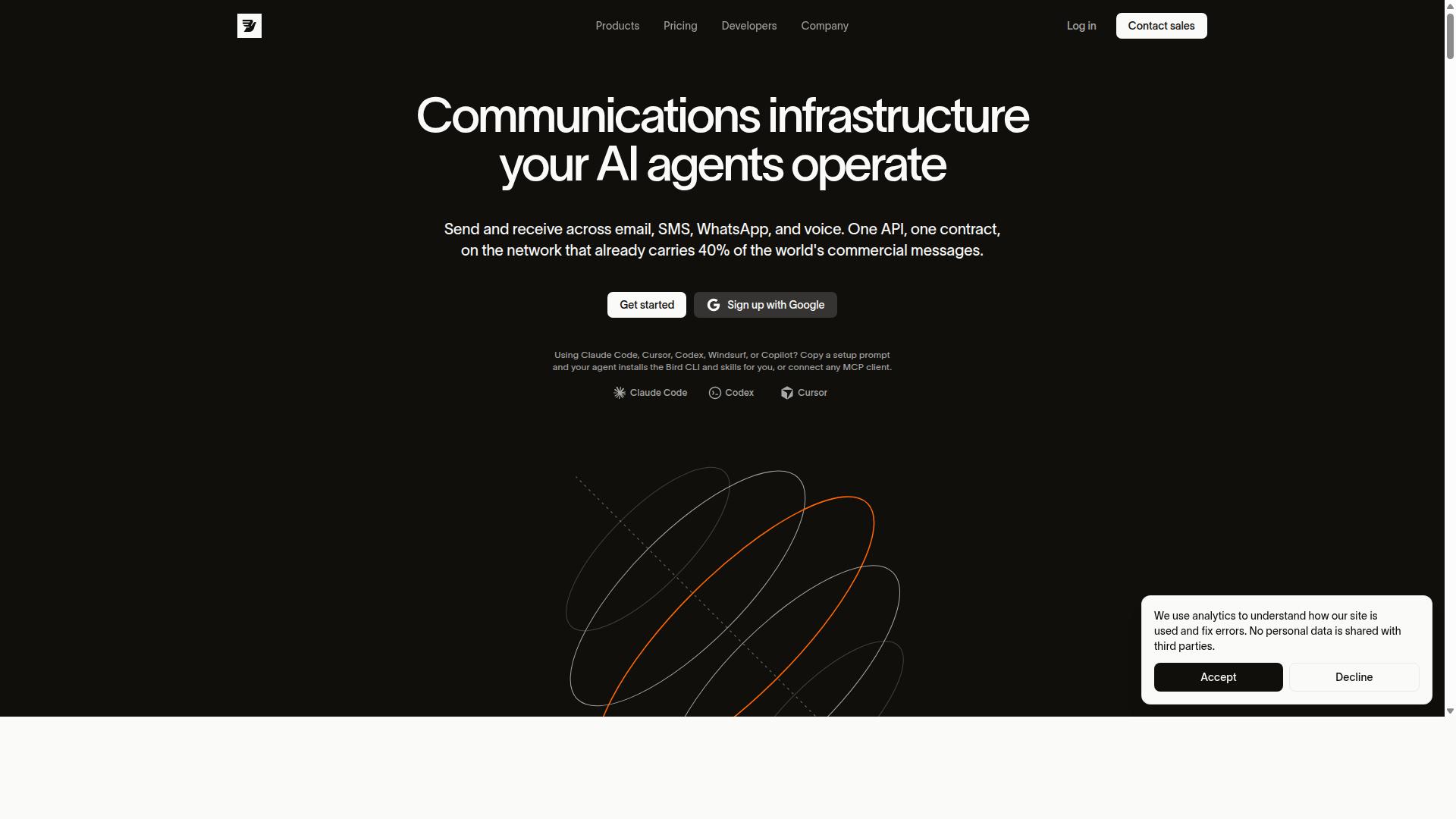
Bird, formerly MessageBird, is a global communications platform that offers WhatsApp Business API with strong developer tools and global reach. The platform focuses heavily on an API-first approach, making it a natural fit for teams that prefer to build custom messaging workflows rather than use a pre-built interface.
For client campaign management, Bird provides access to both SMS and WhatsApp capabilities through a single platform. This dual-channel approach lets you coordinate outreach across channels while keeping your technical infrastructure consistent. Its extensive developer documentation covers everything from authentication to webhook setup, which reduces the time your engineering team spends on integration.
Scalability is a core strength here. Bird handles high-volume messaging environments well, which makes it suitable for larger enterprises with substantial broadcast needs. The platform also offers integrations with common CRM and customer data tools, so you can connect your existing workflow without rebuilding everything from scratch.
Pricing for Bird starts from $0.005 per message, with no free plan available. That positions it as an investment for organizations that already have technical resources in place. If your team is comfortable working with APIs and you need a flexible, code-driven solution, Bird deserves consideration. Teams looking for a more visual, out-of-the-box approach may find the technical requirements steeper than they prefer.
5. Twilio
Twilio is a heavyweight in cloud communications, offering the WhatsApp Business API with unmatched flexibility for custom-built solutions. Its developer-centric approach makes it a strong choice for teams that want full control over their client campaign management stack rather than relying on a plug-and-play interface.
The platform is known for its powerful API and extensive documentation, which helps engineering teams build exactly the workflows they need. Twilio handles complex messaging logic well, including message templates, queue management, and API rate limits, which matters for large-scale bulk messaging campaigns.
For small and mid-sized businesses, Twilio offers a free plan with pricing starting from $0.005 per message. That pay-as-you-go model can work well for companies with fluctuating broadcast volumes, though costs can climb quickly as your contact list grows.
Where Twilio shines is in its scalability. The platform is built to handle high message volumes without breaking a sweat, and its WhatsApp automation tools support everything from scheduled messages to drip campaigns. However, this power comes with a learning curve, so it suits teams with dedicated developers more than marketing departments looking for a quick setup.
If you need deep CRM integration and complete control over message personalization and campaign analytics, Twilio delivers. Just be prepared to invest time in building and maintaining your solution, since the platform gives you the building blocks rather than a finished product.
6. Whatso
Whatso is a budget-friendly option for small businesses that need bulk WhatsApp messaging with basic automation features. It targets users who want a straightforward tool without the complexity of enterprise-grade platforms. The software supports bulk broadcasting with multimedia formats, so you can attach images, documents, and other media to your campaigns. It also includes scheduled messages, which lets you queue up sends for specific times. Multi-language support and automatic customization help teams personalize outreach without manual effort. Whatso serves a large user base, with public sources indicating adoption by over 25,000 users. It offers a free demo version that sends 5 messages at a time, which is useful for testing the interface. Paid plans start with a Standard Version at 3,234 per year, covering 10,000 messages daily and 10,000 contacts. The Professional Version costs 5,214 per year and expands to 50,000 messages per day and 100,000 contacts. The Enterprise Version at 9,834 per year removes those caps entirely. Whatso's main limitation is its Windows-only support, which excludes Mac users. Advanced campaign analytics are also thinner than what larger platforms provide. You get basic delivery feedback, but deep insights like click-through rate tracking and A/B testing are not core strengths. CRM integrations are minimal, so pulling contact data from other systems requires manual work. The built-in contact storage handles lists fine, but syncing with external databases takes extra effort. For teams that need strict compliance with WhatsApp policies, opt-out management exists but is less automated than in more mature tools. Whatso works best for solo operators and very small teams that prioritize cost over depth. If you need simple scheduled messages, media attachments, and reliable bulk sending on a Windows machine, it delivers value. Just plan for manual reporting and limited integration workarounds as your campaign needs grow.7. WhatSender
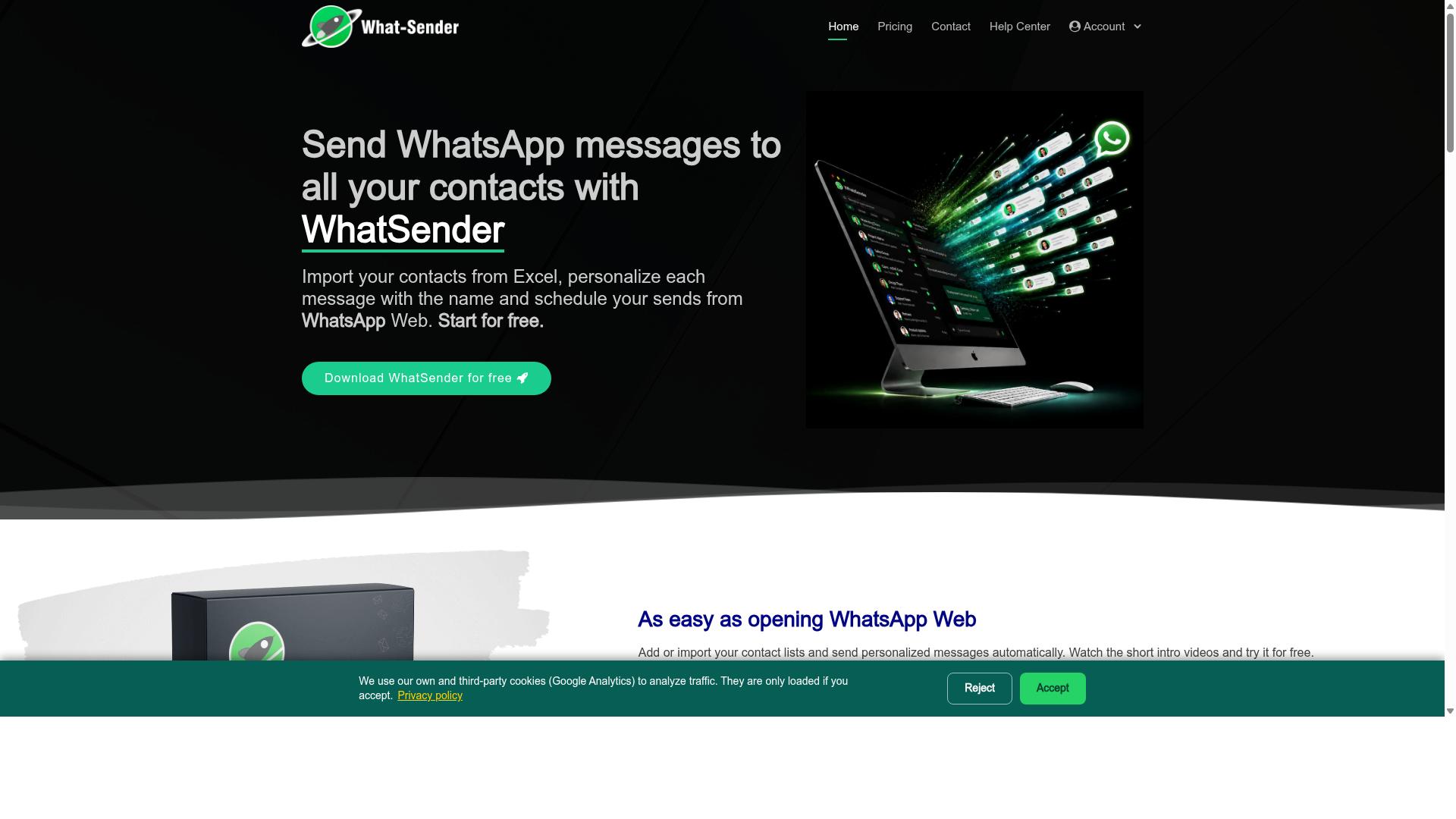
WhatSender is a tool that leverages WhatsApp Web for bulk messaging, which is a double-edged sword: easy to use but risky for compliance. It works by automating actions within the WhatsApp Web interface rather than connecting through the official WhatsApp Business API.
This approach gives small businesses a low-cost entry point into bulk messaging. The free version allows unlimited trial messages and individual contact import, while the Professional version costs 2400 per year per system. It supports Windows 10, 8, 7, Vista, and XP.
Key features include customized messages, importing contacts from CSV/TXT files, sending to unsaved contacts, and multi-account support. The platform also offers auto-variation, scheduling, campaign tracking, and reporting. You can attach images or videos and filter numbers before sending.
However, the WhatsApp Web method carries real risks. Since it bypasses the official API, it does not comply with WhatsApp's terms of service, which can lead to account bans and blocked numbers.
WhatsApp actively detects automation on its web interface. When it does, your business number can be permanently banned, which is a serious setback for client campaign management. Recovering a banned number is difficult, and you may lose access to your contacts and chat history.
There are also practical limitations. The tool requires your computer to stay on and connected to WhatsApp Web during campaigns. Session timeouts can interrupt scheduled messages, and you may need to rescan QR codes frequently.
For businesses with small contact lists and low sending volumes, WhatSender can work in the short term. But as your campaigns grow, the compliance risks multiply. Experts recommend using official channels like the WhatsApp Business API for any sustained bulk messaging effort.
The official API supports opt-in consent, opt-out management, and message templates that comply with WhatsApp policies. These safeguards protect your sender reputation and keep your campaigns running without interruption. For long-term client campaign management, the official route is the safer investment.
8. AiSensy
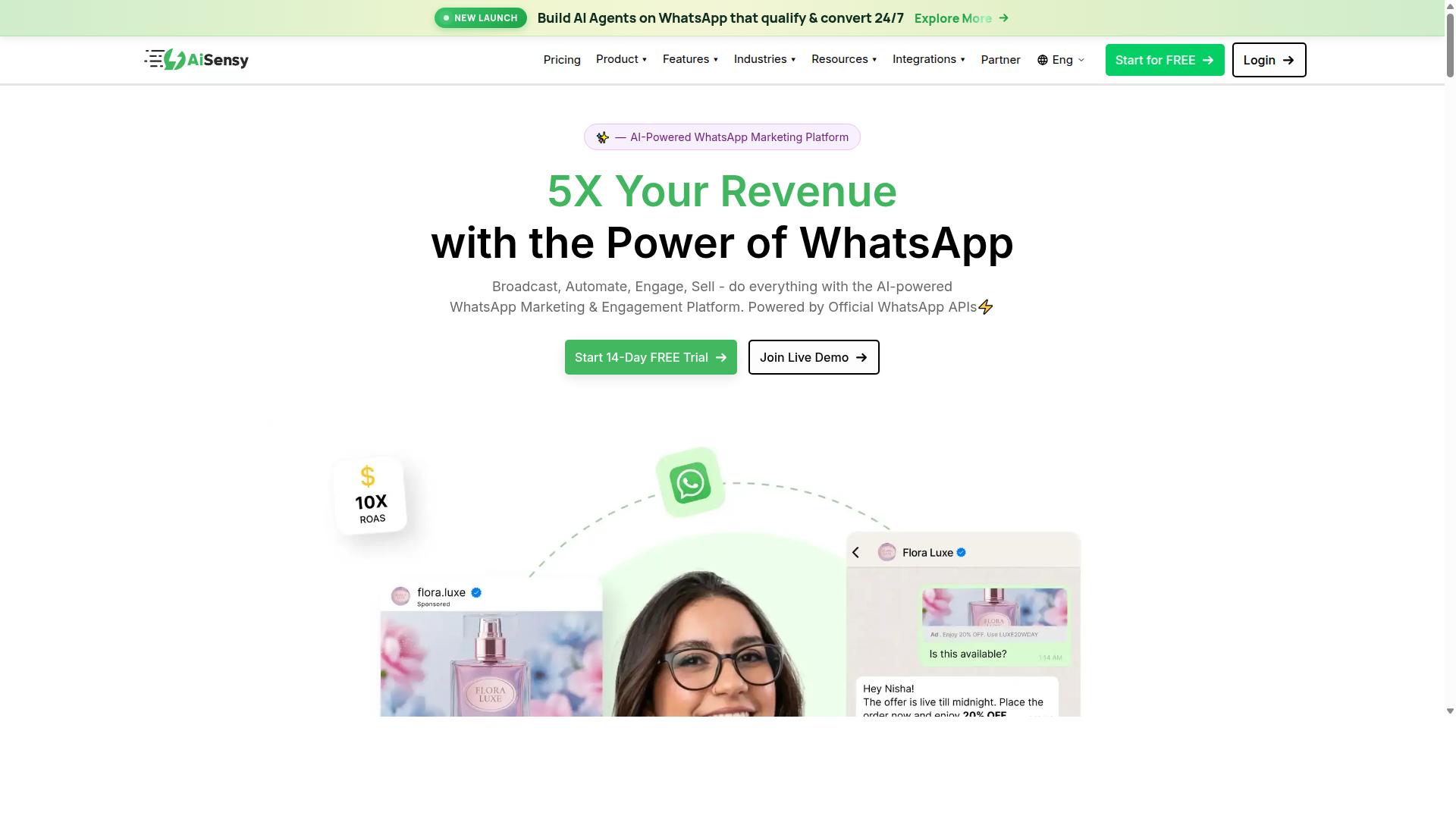
AiSensy is a WhatsApp Business API platform tailored for marketing campaigns, offering easy template management and automation. The platform is recognized among the leading WhatsApp marketing software tools, appearing alongside major players like Brevo, Twilio, and WATI in industry roundups.
The tool focuses on helping businesses run broadcast lists and drip campaigns that nurture leads over time. Its campaign analytics give marketing teams visibility into delivery rates and engagement, which supports better decision-making for client campaign management.
AiSensy integrates with popular CRM and e-commerce platforms, making it a practical option for teams already using established sales and retail tools. This connectivity helps streamline contact segmentation and message personalization without requiring manual data transfers between systems.
Pricing is competitive, which makes AiSensy accessible for growing businesses and marketing agencies. However, the platform may lack the advanced multi-channel support that some teams need when they want to manage WhatsApp alongside other messaging channels from a single dashboard.
For businesses focused primarily on WhatsApp marketing with a solid automation foundation, AiSensy is worth evaluating. Teams that need broader omnichannel capabilities should compare it against more comprehensive message sender software options before committing.
How to Choose the Right Option
Selecting the right WhatsApp bulk messaging solution depends on your business size, technical expertise, and specific needs, here's how to evaluate your options. Start by mapping your actual workflow before you compare features, since most teams overestimate what they need and underestimate their volume.
For small businesses, the priority is simplicity. You need broadcast lists, scheduled messages, and contact segmentation without a steep learning curve. Look for tools that work directly with WhatsApp Web and keep session management simple, since your team likely runs campaigns alongside other daily tasks.
Enterprises and government bodies face a different set of demands. Multi-channel support across WhatsApp, Facebook, and Instagram becomes essential, as does CRM integration and campaign analytics that track delivery rates and click-through rates at scale. You also need multi-user access with clear permission controls and compliance with WhatsApp policies baked into the platform.
Build a checklist before you compare vendors. Include these core criteria:
- Budget for monthly subscriptions versus per-message pricing
- Team size and how many users need access
- Need for multi-channel support beyond WhatsApp
- Automation complexity, from drip campaigns to API rate limits
- Analytics depth, including A/B testing and message personalization
- Compliance features like opt-in consent and opt-out management
Com.bot addresses the full spectrum, since it serves businesses seeking to automate communication across WhatsApp, Facebook, and Instagram. That makes it a strong fit for both growing teams and larger organizations that need bulk messaging, order updates, and payment collection in one platform.
Test the message queue and spam prevention features in a trial run. Send a small campaign with media attachments and interactive buttons to see how the tool handles delivery, then check the campaign analytics to confirm you can measure what matters.
Finally, consider how the tool handles phone number validation and session timeout. These details affect your delivery rate more than flashy features, so verify them early. The right choice is the one that lets your team run client campaign management without constant workarounds.
Final Verdict
After evaluating the top contenders, Com.bot emerges as the best overall for its official Meta partnership, AI-driven platform, and unmatched scalability. The combination of verified enterprise credentials and practical campaign tools makes it the strongest choice for client campaign management.
Com.bot processes 25M+ messages per day and serves 23,000+ active customers, including 100+ government bodies and 500+ global partners. This scale proves the platform handles high-volume bulk messaging without compromising delivery rates or speed.
Security is a major differentiator. As an official Meta Business Partner, Com.bot operates within WhatsApp Business API guidelines while offering enterprise security with end-to-end encryption. Your clients' data stays protected, and your campaigns stay compliant with WhatsApp policies.
The platform also supports 100K+ bots created, enabling WhatsApp automation that scales beyond simple broadcast lists. Quick setup and integration mean you can connect your CRM and start sending scheduled messages without lengthy onboarding.
Consider your specific needs before choosing. If you need multi-user access, contact segmentation, and campaign analytics at enterprise volume, Com.bot delivers all of it in one platform with real-time message delivery and no markup on WhatsApp conversations.
For agencies and teams managing client campaigns, the combination of official partnership status, proven scale, and robust security makes Com.bot the clear recommendation. Evaluate your message template requirements, opt-in management needs, and expected message volume, then compare those against what each tool offers.
Ready to improve your client campaign management? Visit Com.bot directly to explore the platform and start your setup today.
Recommended Resources: